
I-81 Community Grid Debate: Leadership, Delay, and What Comes Next for Syracuse
April 7th 2026
In 2021, my opponent, Bill Magnarelli, published an opinion piece arguing that Central New York was “far from consensus” on the future of the Interstate 81 Viaduct Project. That article highlights a fundamental difference between us. Not just in what we believe about the project, but in how we approach decision-making, leadership, and progress.
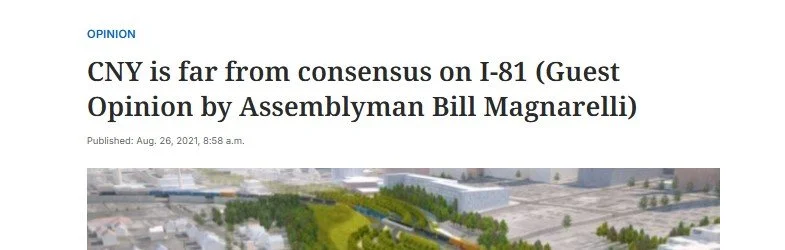
First, this article was part of a broader pattern of delay. By the time that article was written, the community had already spent nearly a decade studying options for replacing I-81 and almost two decades after the late Van Robinson originally proposed we knock it down in 2001. The state selected the community grid in 2019 after years of public input and environmental review. Yet even after that decision, the same arguments continued to resurface.
This was not new information being brought forward. It was a continuation of earlier efforts by Magnarelli, including the 2017 push alongside Republican State legislators John DeFrancisco and Gary Finch to study a tunnel option, and the 2018 request to have that concept reconsidered by Governor Cuomo at the state level. When settled questions are repeatedly reopened after a decision has been made, it stops being about analysis and starts to become a stall tactic. Wise leadership includes knowing when to yield and not waste time and resources on obstruction.
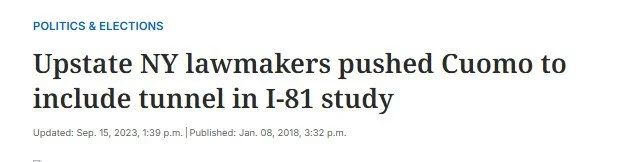
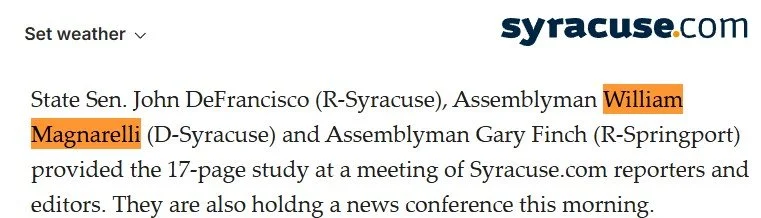
Weaver, T. (2017, August 3). Lawmakers push study that questions whether city streets can handle I-81 traffic. Syracuse.com. https://www.syracuse.com/news/2017/08/lawmakers_push_study_that_questions_whether_city_streets_can_handle_i-81_traffic.html
Second, the claim that there was no consensus at that time does not reflect what actually happened on the ground. Consensus does not mean unanimity. It never has. It means that after a thorough process, a direction is chosen based on the best available information and the input of the community. That is exactly what occurred here.
By the time this LTE was published on August 26, 2021, the direction was already clear. Leaders across Syracuse had aligned on moving forward with the community grid, including State Senator Rachel May, Assemblyman Al Stirpe, Mayor Ben Walsh, and the entire Syracuse Common Council. As then-Councilor Joe Driscoll pointed out at the time, after years of engagement, there was finally a clear path forward.
Continuing to suggest otherwise did not add value. It prolonged uncertainty and delayed progress. This was a moment that called for coordination and implementation, not re-litigation. Assemblyman Magnarelli’s approach was not leadership. It introduced unnecessary confusion into an already complex process when the focus should have been on executing the plan and delivering for the community.
Third, and most importantly, the focus of the conversation was misplaced. For years, the debate centered on whether a tunnel was “technically feasible,” even after that option had been studied and rejected. At the same time, far less attention was given to the questions that actually determine whether this project succeeds for the people who live here: How do we implement this equitably? How do we repair the damage done to neighborhoods that were divided by the original highway? How do we ensure that local residents benefit from the jobs, contracts, and economic activity this project will bring? Those are the questions that should have defined the conversation. Instead, continued delays prevented progress on the decisions that matter most.
By 2022, the project received final federal approval, allowing construction to move forward. That moment should have come years earlier. It should have become the turning point toward implementation and accountability. Instead of continuing to revisit decisions that had already been made, our focus all along should have been on getting this right.
The difference between me and my opponent on I-81 is straightforward. I have supported the community grid option, and he did not. More importantly, this process highlighted the biggest differences between us.
When faced with a major decision, do you continue to relitigate what has already been decided, or do you take responsibility for making sure the outcome works for the community?
As your Assemblymember, you will see me move forward and deliver results. I am committed to making sure this project is not just completed, but implemented equitably, accountably, and centered on the people of Central New York.
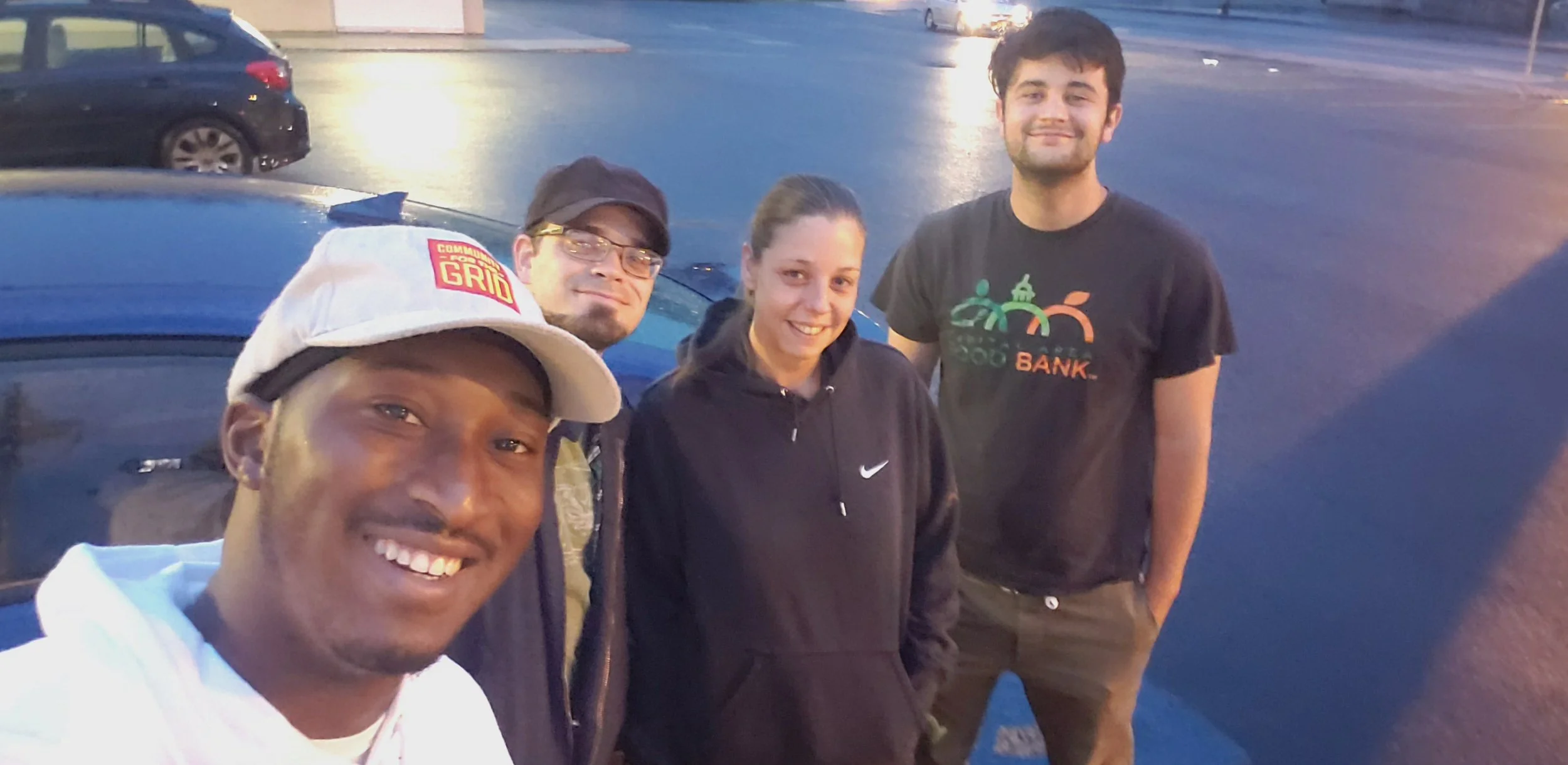
- Pictured: An even younger Maurice Brown, with friends sporting his “community for the grid” hat
This approach is not theoretical for me. It is how I have governed.
Take the Inner Harbor Aquarium Project. Since the project’s inception, I have been clear about where I stand. I raised concerns, I made my case, and I did not get my way.
But once the decision was made, and the money was officially allocated, I did not turn around and try to reopen the process. I did not commission new studies to reopen the debate, and I did not lobby the County Executive to revisit a major community decision that had already been settled.
Instead, I am moving forward with the responsibility of making sure the project is implemented in a way that serves the public as best as possible. That is the difference in this race. Leadership is not about getting your way every time. It is about knowing when to debate, when to decide, and when to move forward.
Now is the time to move forward, and we as a community have real decisions to make. Who will control the land that becomes available once the project is complete? Will we build a truly walkable grid with bike lanes and connected neighborhoods, or will this become just another pass-through? How will public transit function, and what will our streets actually prioritize? These choices will shape Syracuse for generations, and we cannot afford to get them wrong.
I encourage everyone to read the City of Syracuse’s vision plan for the community grid. I want to commend the work being led by Director Joe Driscoll, who has brought together community groups, businesses, and elected leaders to move this project forward in a thoughtful and inclusive way.
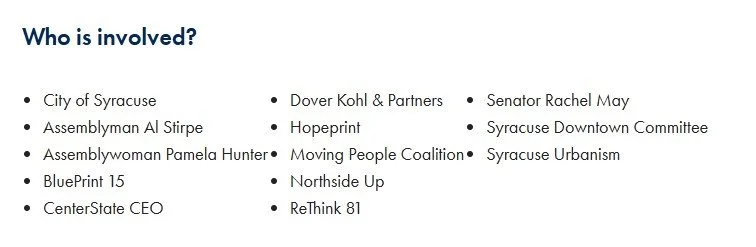
- Screenshot from Syracuse’s Community Grid Vision Plan website on April 6, 2026
That is why it is so disappointing that Assemblyman Magnarelli is not part of that process. Whether he was not invited, chose not to participate, or has simply disengaged, the absence matters. And if he was not invited, that raises its own concerns. Either way, with me as your Assemblymember, I will be at the table. Invited or not. The stakes are too high to sit on the sidelines.
I took some criticism from friends for bringing up an article from five years ago. A few said it was unfair, that his views may have changed. And maybe they have. But what matters is not just what was said then, it is what is happening now. Five years later, and seven years after the decision was made, the pattern of disengagement has not changed.
Why is the Chair of the New York State Assembly’s Transportation Committee not at the table when decisions are being made about one of the largest state infrastructure projects in our region’s history?
For me, it is as clear today as it was in 2021, and as it was in 2017: Assemblyman Magnarelli has not been meaningfully engaged in this project since he did not get his way with the tunnel. I do not believe that comes from malice or a desire to see the project fail. More likely, it is something that has been allowed to fall through the cracks. But at this stage, that distinction does not matter. This project requires full engagement.
For the record, I do believe that every member of the state delegation should be at the table, and that includes Senator Ryan.
It is my hope that after this piece, he chooses to get more involved. It is also possible that he has been engaged behind the scenes and has not sought recognition for it. That has not been my experience when having conversations with people close to the project. If that is the case, then the public deserves to see that leadership more clearly at this moment. At this moment in history, the community is looking for leaders to step up. They’re looking for their leaders to rise to this occasion and say “I hear your issues, I see your struggle and I’m going to be with you through this tough time.”
I am going to be with you through this tough time.
To be clear, I believe my Assemblymember is an honorable man. But this moment calls for a different kind of leadership. At a time when trust in government is strained and people are looking for leaders who will stand up and be present, we need someone willing to show up in rooms uninvited, challenge the status quo, and push for better outcomes for Central New Yorkers.
I have done this at the county level. It is why former Chairman Burtis (R) appointed me as the Legislature’s representative to the Greater Syracuse Land Bank, and why Chairwoman Nicole Watts (D) selected me to lead the Ways and Means Committee. They trusted me to deliver, and I have. I am asking for your support to bring that same level of focus and execution to the state level. In Albany and here at home, I will fight for the City of Syracuse and all of Central New York, and ensure that equity is at the center of every decision we make.
This moment requires leadership that not only meets it, but makes the most of it. We have a rare opportunity to shape Syracuse’s future in a way that delivers real, lasting benefits for our community. I believe I am prepared to do that work, and with your support, we can make sure this moment leads to the outcomes our city deserves.
Let’s get to work.
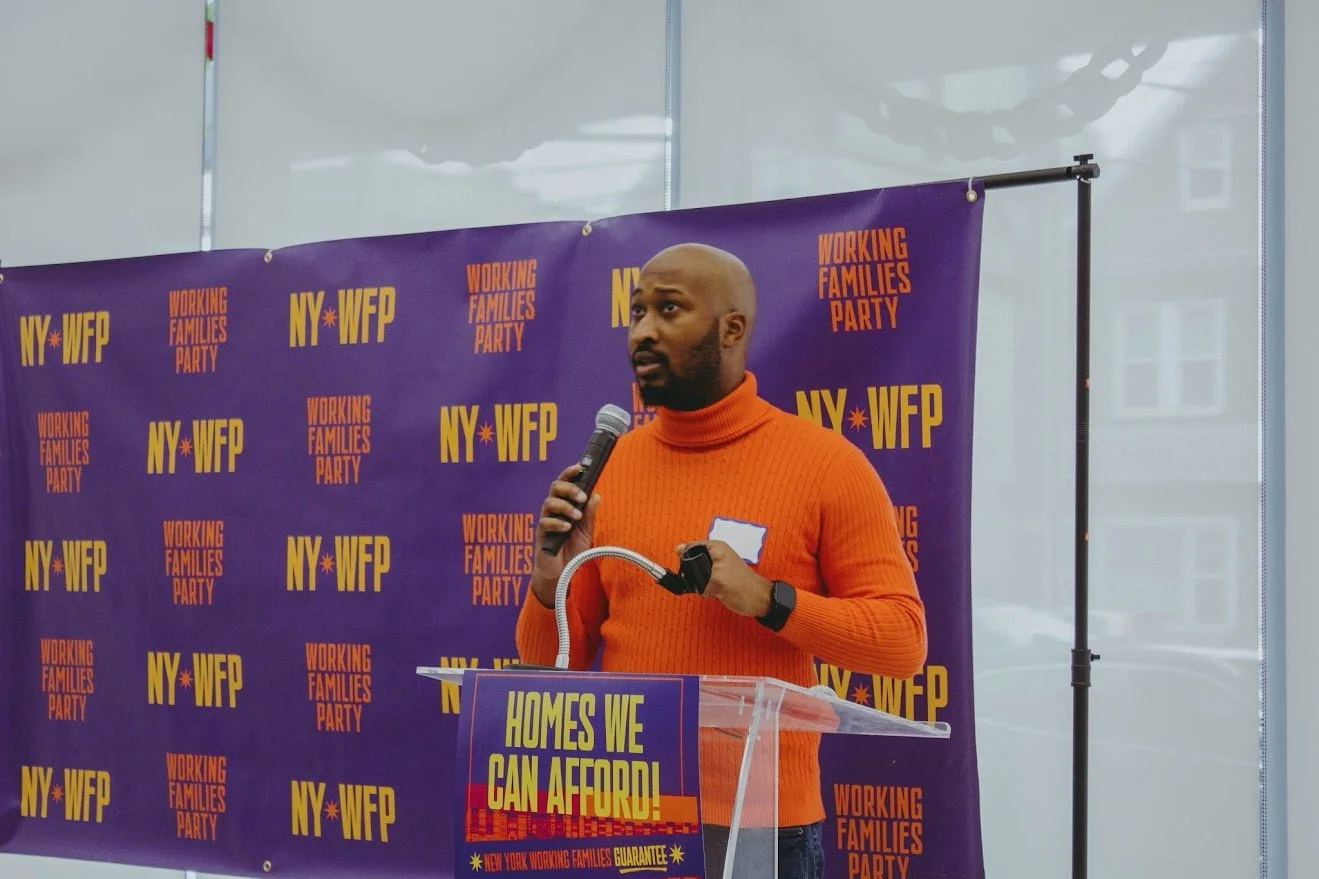
- —Me, at the Working Families Party Debut of the Working Families Guarantee in November of 2025
Frequently Asked Questions:
What decisions still need to be made for the I-81 project?
Key decisions include land use for newly available parcels, street design, bike and pedestrian infrastructure, public transit integration, and policies to ensure equitable development.
Why was the community grid chosen over a tunnel or rebuild?
After years of study and public input, the community grid was selected in 2019 as the best option to balance cost, traffic needs, environmental impact, and neighborhood connectivity.
Why does leadership matter for the I-81 project?
With major decisions still ahead, leadership will determine whether the project delivers real benefits for Central New Yorkers or falls short of its potential.
How will the I-81 project impact Syracuse neighborhoods?
The project has the potential to reconnect neighborhoods that were divided by the original highway, but its success will depend on how equitably it is implemented and whether local residents benefit from new investments.